LiveImage
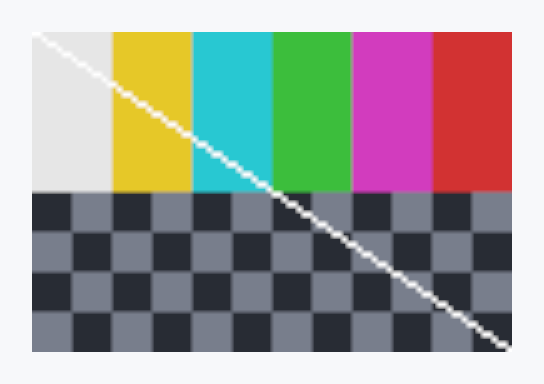
LiveImage — shows a picture another thread rewrites many times a second.
Public types
| Kind | Name |
|---|---|
enum | LiveImageSizing — How a LiveImage sizes its box |
struct | LiveImage — Shows a LiveImageSource |
struct | LiveImageHandle — A handle to a LiveImage, for the UI thread: the size and status of what it shows, where it shows it, and the mapping between its points and the source's… |
Public functions
LiveImage
| Returns | Function |
|---|---|
| Constructors | |
Self | new(source: impl Into<Prop<LiveImageSource>>) |
| Builder methods | |
Self | fit(fit: ImageFit) |
Self | alignment(alignment: Alignment) |
Self | sizing(sizing: LiveImageSizing) |
Self | width(width: f32) |
Self | height(height: f32) |
Self | size(width: f32, height: f32) |
Self | device_pixels(on: bool) |
Self | scaling(scaling: ScalingFilter) |
Self | orientation(orientation: ImageOrientation) |
Self | pixel_snap(on: bool) |
Self | background(color: impl Into<ColorProp>) |
Self | placeholder(text: impl Into<Prop<String>>) |
Self | alt(text: impl Into<Prop<String>>) |
Self | a11y_hidden() |
Self | pause_when_inactive(pause: impl Into<Prop<bool>>) |
Self | dim_when_disabled(on: bool) |
Self | with_handle(handle: &LiveImageHandle) |
| Methods | |
LiveImageHandle | handle() |
LiveImageHandle
| Returns | Function |
|---|---|
| Constructors | |
Self | new() |
| Methods | |
Option<WidgetId> | widget_id() |
Option<LiveImageSource> | source() |
Signal<LiveImageStatus> | status() |
Signal<Option<(u32, u32)>> | frame_size() |
Option<ImageGeometry> | geometry() |
Option<(u32, u32)> | map_to_source(local: Point) |
Option<(u32, u32)> | map_to_source_clamped(local: Point) |
Option<(f32, f32)> | map_to_source_f32(local: Point) |
Option<Rect> | map_from_source(rect: PixelRect) |
LiveImageStats | stats() |
Detailed description
A virtual machine's screen, a video frame, a camera preview: the pixels
never pass through the widget. A producer writes a
LiveImageSource from any thread through a LiveImageWriter; the
window's renderer uploads what changed since its last frame and draws it
where this widget's last paint put it. A commit that changes only pixels
runs no paint(), marks no widget and repaints nothing else: the window
replays its cached frame. Only a change of the source's size or status
(resized, Waiting, Live, Disconnected) relayouts and repaints this
widget. A producer that hands over whole frames, changed or not, writes
through a LiveImageDiffWriter instead, which commits only what changed
and nothing for an identical frame.
Sizing
LiveImageSizing picks the box: Aspect (the default) is the largest
box with the picture's aspect ratio inside the proposal, rounded to whole
device pixels; Fill takes the whole proposal and letterboxes; Natural
is one source pixel per logical pixel (device_pixels
makes it one per device pixel). width,
height and size pin the box
and win over the mode. Inside the box the picture is placed by an
ImageFit and an Alignment, turned by an ImageOrientation, and
its edges snap to the device-pixel grid.
#![allow(unused)]
fn main() {
use teksilo_widgets::primitives::live_image::{LiveImage, LiveImageSizing};
use teksilo_widgets::primitives::live_image::{LiveImageSource, LivePixelFormat};
use teksilo_widgets::primitives::ImageFit;

let screen = LiveImageSource::new(LivePixelFormat::Bgrx8);
let writer = screen.writer();
// The producer keeps its writer: when the last one drops, the source
// frees its pixels and the picture goes.
std::thread::spawn(move || loop {
    let frame = vec![0u8; 720 * 1280 * 4]; // the guest's next frame
    writer.write_frame(720, 1280, &frame, 720 * 4).unwrap();
    std::thread::sleep(std::time::Duration::from_millis(16));
});
let _view = LiveImage::new(screen)
    .sizing(LiveImageSizing::Aspect)
    .fit(ImageFit::Contain)
    .alt("Virtual machine screen");
}
Input
LiveImage handles no input. An app that forwards pointer input to what
the picture shows attaches its handlers through WidgetBuilder and maps
the positions they receive with the widget's LiveImageHandle, taken
before a WidgetBuilder method wraps the widget (or injected with
with_handle):
map_to_source gives the source pixel
a point shows, from the same placement paint drew. A position handed in
window space (Scroll::window_position) goes through
EventContext::to_local first.
Accessibility
One Role::Image node named by alt; a decorative
picture calls a11y_hidden instead. Pixels are
not accessible content, and a commit never changes the node: only a
status change does, when the placeholder
becomes or stops being its description.
Density
The picture above is the widget at TargetDensity::Compact, the mouse-and-keyboard ladder. Below is the same subject on the same canvas with only the ladder changed, so what moves is the density and nothing else — where the subject no longer fits, that is what the denser targets cost it at that size. See docs/density-and-targets.md.
Touch
API reference
📖 Full rustdoc API for this module
pub enum LiveImageSizing
How a LiveImage sizes its box. LiveImage::width,
LiveImage::height and LiveImage::size pin it and win over the
mode.
#![allow(unused)]
fn main() {
pub enum LiveImageSizing { /* variants */ }
}
Variants
Aspect— The largest box with the picture's aspect ratio inside the proposal, each side rounded to whole device pixels. It scales up as well as down; an axis the proposal leaves open follows the other one. With no frame size yet, the proposal on its bounded axes, else zero.Fill— The whole proposal, growing into a stack's slack; thefitplaces the picture and the rest is letterbox. An axis the proposal leaves open follows the picture's aspect ratio.Natural— The picture's own size, rigid: one source pixel per logical pixel, or per device pixel withdevice_pixels. Zero with no frame size yet.
pub struct LiveImage
Shows a LiveImageSource. See the module documentation.
#![allow(unused)]
fn main() {
pub struct LiveImage { /* fields */ }
}
Methods
pub fn new(source: impl Into<Prop<LiveImageSource>>) -> Self
Show source. A Signal<LiveImageSource> switches sources: the
widget rebuilds and attaches the new one, keeping its handle's
Signals, and the window lets go of the old one's texture at its next
frame. A small picture its source committed once is kept a while
instead, in case it comes back.
pub fn fit(mut self, fit: ImageFit) -> Self
How the picture fills its box: the CSS object-fit set. Default
ImageFit::Contain. Cover, and None on a picture larger than
the box, crop it to the box.
pub fn alignment(mut self, alignment: Alignment) -> Self
Where the picture sits in its box when the fit leaves room or crops.
Leading and Trailing follow the layout direction. Default
Alignment::CENTER.
pub fn sizing(mut self, sizing: LiveImageSizing) -> Self
How the box is sized. Default LiveImageSizing::Aspect.
pub fn width(mut self, width: f32) -> Self
Pin the box's width, in logical pixels; its height follows the picture's aspect ratio (zero before the first frame).
pub fn height(mut self, height: f32) -> Self
Pin the box's height, in logical pixels; its width follows the picture's aspect ratio (zero before the first frame).
pub fn size(mut self, width: f32, height: f32) -> Self
Pin the box to width × height logical pixels.
pub fn device_pixels(mut self, on: bool) -> Self
Measure the picture's own size in device pixels: one source pixel
per device pixel instead of per logical pixel. The fit starts from
that size too: ImageFit::None draws the whole picture at it, and
ImageFit::ScaleDown never grows it past it. With
sizing(Natural), fit(ImageFit::None) and
scaling(ScalingFilter::Nearest), every texel lands on one device
pixel, at any device scale. Default false.
pub fn scaling(mut self, scaling: ScalingFilter) -> Self
How the picture is sampled when drawn at another size. Default
ScalingFilter::Linear; Nearest keeps an integer upscale crisp,
and Trilinear keeps a thumbnail drawn below half size from
aliasing.
pub fn orientation(mut self, orientation: ImageOrientation) -> Self
How the picture is turned or mirrored for display. A quarter turn
swaps the width and height the box is sized from. Default
ImageOrientation::Normal.
pub fn pixel_snap(mut self, on: bool) -> Self
Snap the picture's edges to the device-pixel grid, which keeps a 1:1 picture sharp. An edge moves by less than one device pixel. Turn it off only for a picture whose box is animated, where that step would show: the placement is then left where the layout puts it, and the renderer does not snap a one-to-one picture either. Snapping applies under translations and scales; a rotated or skewed ancestor turns it off. Default true.
pub fn background(mut self, color: impl Into<ColorProp>) -> Self
The fill of the letterbox, and of the whole box while the source is
not Live. A role or a Signal follows the theme and the window.
Default transparent.
pub fn placeholder(mut self, text: impl Into<Prop<String>>) -> Self
Text shown centred in the box while the source is not Live
(secondary text, body style, truncated to the box), and the node's
description then. Painted, so it takes no input. Default empty.
pub fn alt(mut self, text: impl Into<Prop<String>>) -> Self
The accessible name of the picture. A tr! string follows the
locale. Give it, or call a11y_hidden: a debug
build asserts one of them.
pub fn a11y_hidden(mut self) -> Self
Hide a decorative picture from assistive technology: what it shows is said by text beside it.
pub fn pause_when_inactive(mut self, pause: impl Into<Prop<bool>>) -> Self
Stop uploading while the window is inactive: not focused, or covered
where the platform reports it. The picture keeps the last frame it
uploaded and a commit no longer wakes the window; once the window is
active again, the next frame shows the latest commit, in one upload.
A change of size or status still applies, a picture with nothing of
its size uploaded yet still gets its first frame, and a screenshot
shows the latest commit all the same. The pause belongs to the
window's texture: while another widget of the window shows the same
source unpaused, both stay live. A Signal<bool> turns it on and off
as the user decides. Default false.
pub fn dim_when_disabled(mut self, on: bool) -> Self
Dim the picture in a disabled subtree, by the theme's
disabled_content_opacity
over the widget's background, which then fills the whole box. By
default a live picture keeps its full strength when an ancestor is
disabled: a VM's screen is content, not a control. A commit still
repaints nothing while dimmed. Default false.
pub fn with_handle(mut self, handle: &LiveImageHandle) -> Self
Drive this widget through handle, made beforehand with
LiveImageHandle::new: the form a teksu! tree can use, where
handle cannot be called. A handle follows one
widget; handing it to a second moves it there.
pub fn handle(&self) -> LiveImageHandle
A handle to this widget, for the UI thread: its source's size and
status, its placement, and the mapping from widget-local points to
source pixels. Take it before a WidgetBuilder method wraps the
widget.
pub struct LiveImageHandle
A handle to a LiveImage, for the UI thread: the size and status of
what it shows, where it shows it, and the mapping between its points and
the source's pixels. Clone is an Rc clone; !Send.
It owns the widget's Signals from construction, so it works before the widget mounts, and they stay the same across a switch of source. It does not keep the widget alive: once the widget is gone, it has no placement.
#![allow(unused)]
fn main() {
pub struct LiveImageHandle { /* fields */ }
}
Methods
pub fn new() -> Self
A handle for a widget not built yet, which takes it with
LiveImage::with_handle.
pub fn widget_id(&self) -> Option<WidgetId>
The widget's id while it is mounted.
pub fn source(&self) -> Option<LiveImageSource>
The source the widget shows; None until a widget took the handle.
pub fn status(&self) -> Signal<LiveImageStatus>
The source's status as the window's last layout saw it: the same Signal across switches of source.
pub fn frame_size(&self) -> Signal<Option<(u32, u32)>>
The frame size layout uses: the source's buffer, else its size hint, as the window's last layout saw it. The same Signal across switches of source.
pub fn geometry(&self) -> Option<ImageGeometry>
The placement of the last layout, widget-local: the one paint draws
and the mappings below use. None before the first layout, with no
frame size, or once the widget is gone.
pub fn map_to_source(&self, local: Point) -> Option<(u32, u32)>
The source pixel whose displayed square contains the widget-local
point local; None on the letterbox, outside the widget, or
without a placement. A pointer handler's positions are widget-local.
pub fn map_to_source_clamped(&self, local: Point) -> Option<(u32, u32)>
The source pixel nearest local: the point is clamped into the
picture first, for a drag that leaves it. None only without a
placement.
pub fn map_to_source_f32(&self, local: Point) -> Option<(f32, f32)>
Continuous source coordinates of local, unclamped: pixel k spans
[k, k + 1).
pub fn map_from_source(&self, rect: PixelRect) -> Option<Rect>
Where the source pixels of rect are displayed, widget-local: to
place an overlay on what the picture shows.
pub fn stats(&self) -> LiveImageStats
The source's counters and, while the widget is mounted, its attachment's; zero attachment counters otherwise.